




Center for the Prevention, Diagnosis, and Treatment of Lymphedema, Edema, and Lymphatic Disorders in Adults and Children
For the first time in Greece, the Metropolitan Hospital operates a Specialized Center for Lymphedema and Edema, designed around patient needs and fully aligned with the Global Guidelines of the International Society of Lymphology, whose President is the Center Director, Dr. Evangelos Dimakakos.
The Lymphedema and Edema Center comprises a large team of specialists in lymphedema and edema therapy, under the full supervision of the Lymphology Specialist, Dr. E. Dimakakos, capable of providing comprehensive solutions for lymphatic system health.
The Center’s primary goal is Prevention, ensuring that no patient develops lymphedema. Patients receive timely guidance and instructions tailored to their individual needs, before the onset of lymphedema, and particularly before or after surgery or radiation therapy.
Additionally, the Center provides immediate guidance and therapeutic intervention for newly emerging lymphedema or edema, aiming to prevent the need for compression gloves or stockings while ensuring the patient maintains a high quality of life.
Diagnosis is performed by an extremely experienced team using hematologic and imaging methods, including Ultrasound, Magnetic Lymphography, CT Lymphography, and Lymphoscintigraphy, some of which are available only at Metropolitan Hospital nationwide.
It is the first and only center in Greece where the therapeutic management of lymphedema and edema is carried out holistically, in accordance with the international guidelines of the International Society of Lymphology:
- Treatment is guided by Dr. E. Dimakakos, a specialized lymphologist with extensive experience in lymphedema and edema treatment, President of the International Society of Lymphology, and Vice-Chair of the Scientific Committee of the European Lymphology Society.
- Early intervention can reduce lymphedema or edema by 60–70%, up to complete resolution, if treated promptly at onset.
- Manual lymphatic drainage is performed by specialized physiotherapists, offering both edema reduction and patient relaxation.
- Targeted exercise programs led by experienced trainers improve lymph flow, enhance movement confidence, and boost overall well-being.
- A specialized dietitian provides guidance to support weight loss and lymphatic fluid balance.
- Collaboration with the University of Athens Medical School addresses lymphatic disorders in infants and children.
Key Points in Lymphedema Management
- Lymphedema refers to any swelling in the body caused by lymphatic system dysfunction. It may occur congenitally, develop during life, or result from surgery or cancer.
- It is a common complication of cancer surgery, causing significant psychological stress, functional limitations, and reduced quality of life.
- Guidance from a specialized lymphologist is critical for prevention, management, and symptom relief.
- Immediate treatment at onset significantly increases the likelihood of symptom control and full recovery.
- Lymphedema is classified as primary or secondary. Primary lymphedema is a rare hereditary condition where lymph nodes or vessels are absent or abnormal. Secondary lymphedema may arise after cancer surgery, particularly when lymph nodes are removed, often compounded by localized radiation therapy.
- Advanced disease stages, radical surgeries, and radiation therapy are almost always associated with a risk of lymphedema in the affected limb.
- Early symptoms include: A feeling of heaviness, tightness, or swelling in the affected limb or body area, puffiness with indentations from tight clothing, jewelry, or shoes, pain, tension, or discomfort in the affected area.
- The most important preventive measure is immediate education and guidance by the lymphologist, especially immediately after surgery or before radiation therapy.
Complete Decongestive Therapy (CDT) is the only effective treatment for lymphedema according to global guidelines. It is a two-phase therapy that initially includes an intensive phase to reduce edema and a maintenance phase during which the patient learns self-management techniques.
CDT includes:
- Supervision and guidance by the lymphologist
- Specialized manual lymphatic drainage by trained physiotherapists, immediately reducing edema and providing relief and relaxation
- Bandaging or compression garments to maintain results during therapy
- Specialized exercises to stimulate lymph flow, reduce edema, and enhance patient well-being
- Dietary guidance tailored to the patient’s condition from a specialized dietitian
- Additional treatments as needed, considering the patient’s condition and comorbidities
The Center’s team—including the lymphologist, specialized physiotherapist, exercise trainer, dietitian, radiologists, nuclear medicine physician, oncology psychologist, dermatologist, and genetic/microbiology specialist—is available to answer all patient questions and provide comprehensive care.
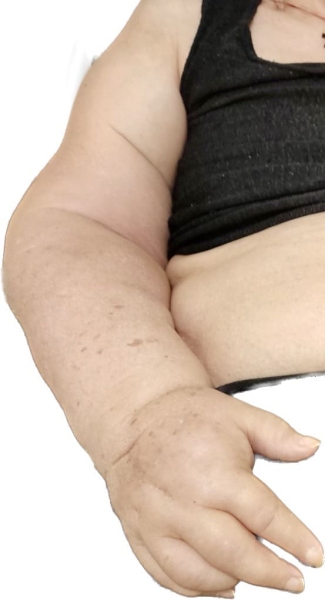
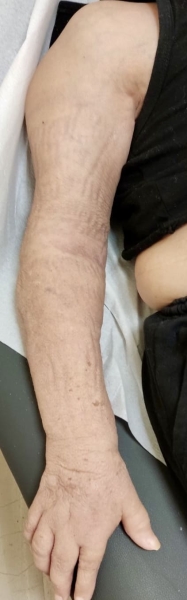
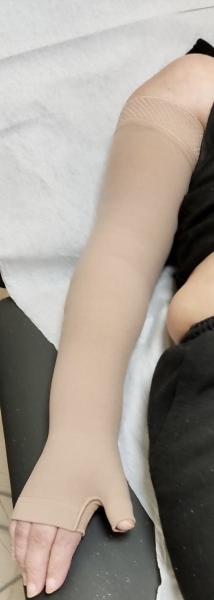
Below is an example showing the improvement of a patient’s hand before and after lymphedema and lymphatic disorder therapy at the Center for the Prevention, Diagnosis, and Treatment of Lymphedema in Adults and Children.
 Before Treatment
 After Treatment
 After treatment with an elastic stocking