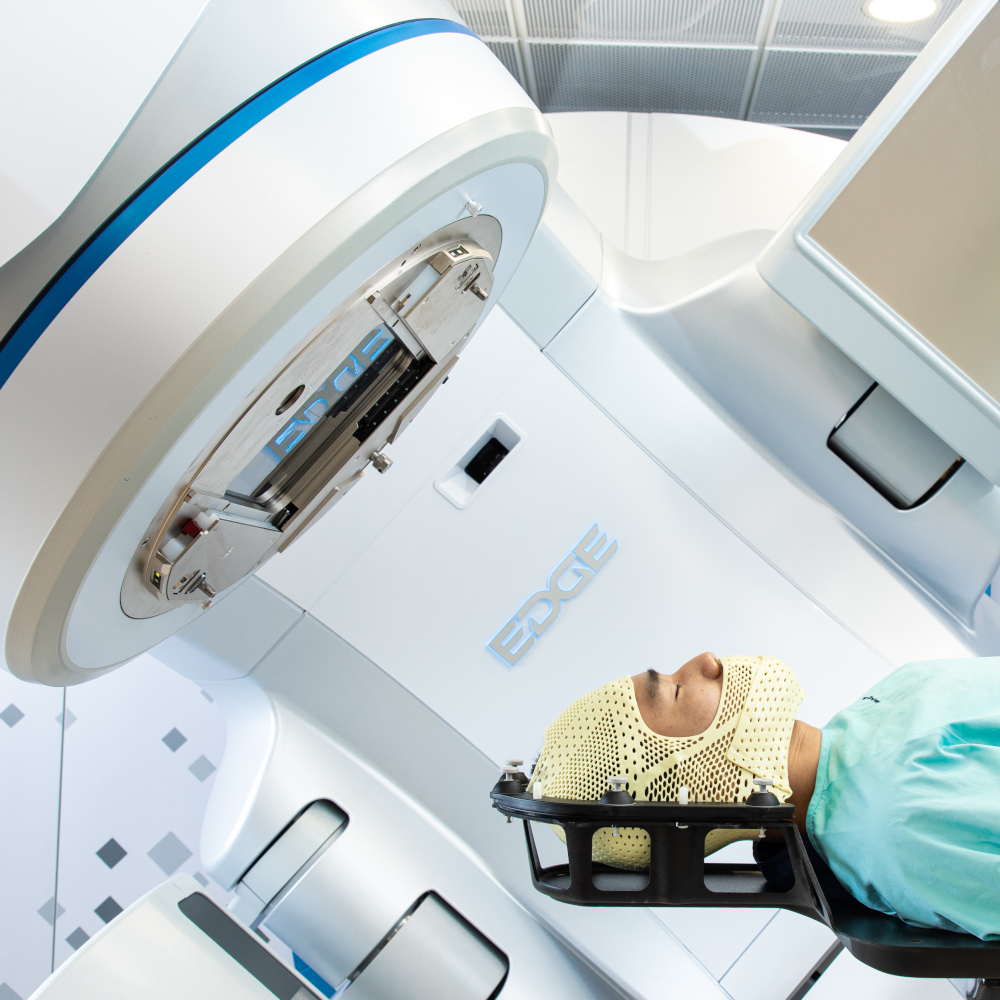





Despite its name, Stereotactic Radiosurgery (SRS) is a non-invasive radiotherapy technique characterized by three key features:
- Extremely high precision (1–2 mm)
- High conformity with a sharp dose fall-off at the tumor periphery, minimizing radiation exposure to surrounding healthy tissues
- Very high daily radiation doses
Stereotactic Radiosurgery is usually completed in 1 to 5 sessions, although additional sessions can be performed for large tumors or in cases of re-irradiation (Fractionated Stereotactic Radiotherapy – FSRT). The main indications for Stereotactic Radiotherapy include: primary malignant brain tumors, brain metastases, acoustic neuroma, meningioma, pituitary adenoma, ocular tumors, hemangiomas, and arteriovenous malformations.