


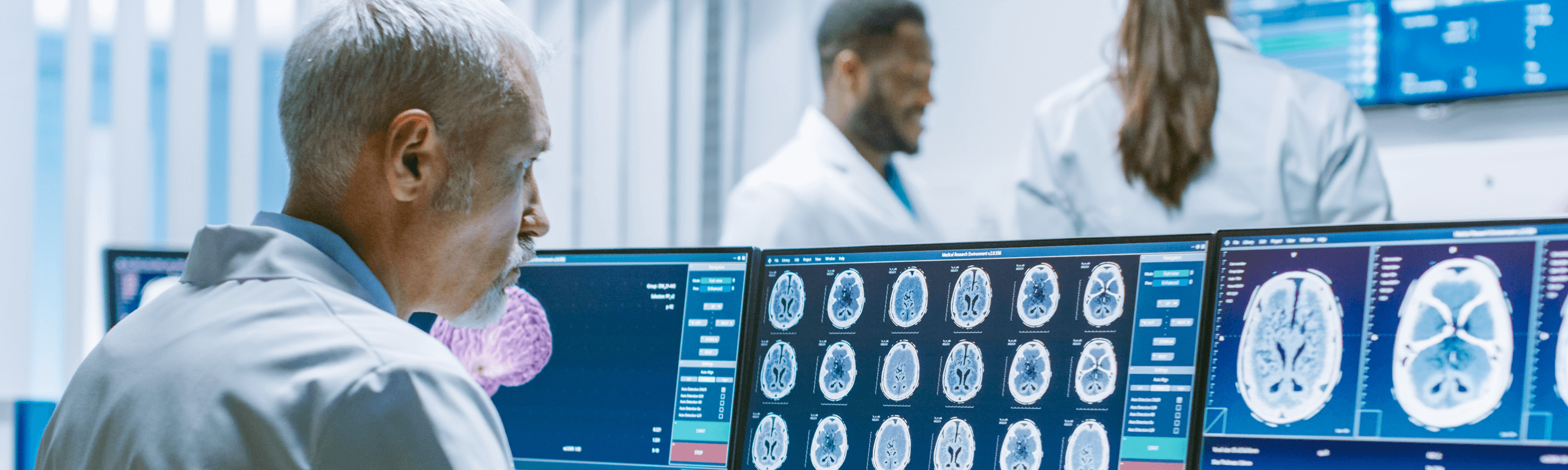





Since its establishment, the Neurophysiology Clinic at Metropolitan Hospital has been fully equipped with the most advanced medical devices and staffed by specialized medical and nursing personnel. The clinic conducts all examinations required for the study of nervous system function, as well as certain therapeutic procedures.
Digital Video – Electroencephalography – Video EEG
Brain mapping
- For adults and children of any age
- Standard and sleep EEG
- Diagnosis, classification, and monitoring of epilepsy
- Investigation of cases involving seizures, loss of consciousness episodes, or other transient disorders
- Memory and cognitive function disorders
- Encephalopathies, encephalitis
Electromyography – EMG
Includes electroneurography with surface electrodes and electromyography with a single-use needle electrode
- For adults and children of any age
- Investigation of lower back pain, sciatica, neck pain, pain, numbness, limb weakness, and assessment of severity and prognosis of conditions affecting nerve roots, brachial and lumbosacral plexus, peripheral nerves, and muscles (e.g., disc herniation, carpal tunnel syndrome, ulnar neuritis, trauma-related injuries, polyneuropathy due to inflammation, diabetes, toxicity, myopathy, myositis)
- Diagnosis of myasthenia and myasthenic syndrome through repetitive nerve stimulation (Desmedt test) and single-fiber electromyography (Single Fibre EMG)
- Facial nerve study with electromyography and blink reflex
- Sympathetic skin response for autonomic neuropathy
- Quantitative electromyography, mainly for the diagnosis of myopathy and myositis
Evoked Potentials
For the study of the Central Nervous System, compressive or demyelinating lesions of the brain and spinal cord in adults and children
- Visual evoked potentials
- Brainstem auditory evoked potentials
- Somatosensory evoked potentials
- Motor evoked potentials with magnetic stimulation
Botulinum Toxin Injection
Under electromyographic guidance for the treatment of spasticity and dystonias in adults and children, e.g., cervical dystonia, writer’s and musician’s cramp, hemifacial spasm, clubfoot, spastic hemiparesis.
Video Telemetry
- Hospitalization and video-EEG recording (diagnostic video telemetry) for 1–3 days to capture paroxysmal disorders or epileptic seizures, in order to identify the cause of these episodes and classify seizure types
- Prolonged hospitalization and video-EEG recording (pre-surgical video telemetry) for 3–5 days to record epileptic seizures and assess patient suitability and preparation for epilepsy surgery programs
- Sleep Studies – Polysomnography (PSG) and Multiple Sleep Latency Test (MSLT) for the diagnosis of neurological sleep disorders and their differentiation from epilepsy, e.g., narcolepsy, sleep behavior disorders, parasomnias, sleepwalking, limb movements during sleep, daytime sleepiness
What you need to do before the examination
- For the electroencephalogram (EEG) and evoked potentials: wash your hair and do not use any hair products. A special cream is applied to stabilize the electrodes, so you will need to wash your hair again afterwards to remove it completely.
- For a sleep EEG: please ask the staff for specific instructions
- For the electromyogram (EMG): do not apply cream or cosmetics to the area that will be examined