








One of the most serious chronic complications of diabetes mellitus, whether type 1 or type 2, is diabetic foot. By “diabetic foot,” we do not mean simply the lower limb of a person with diabetes, but rather a very specific pathological condition. A diabetic foot refers to any pathology that arises directly from diabetes mellitus or from any of its long-term (“chronic”) complications. The presence of various pathological conditions of the diabetic foot below the ankle, such as infection, diabetic foot ulcer, and neuropathic osteoarthropathy, is referred to as diabetic foot syndrome.

Possible lesion sites in diabetic foot

Peripheral angiopathy in diabetes mellitus
Diabetic Foot: When and how often it appears
Due to peripheral neuropathy associated with diabetes mellitus (diabetic neuropathy), patients often have a reduced ability to feel pain (although some may instead experience pathological pain, known as neuropathic pain). Another chronic complication of diabetes, peripheral angiopathy poor blood circulation in the limbs caused by narrowed or, in severe cases, blocked arteries further worsens the condition of the patient’s foot. As a result, a person with diabetes may not realize that their foot is injured by a sharp object (nail, glass, metal, sharp stone) and may also be unaware that their foot lacks the blood supply necessary for proper healing. This means that even small injuries can remain unhealed for a long time. Consequently, individuals with diabetes are at increased risk of developing diabetic foot ulcers. It is estimated that the frequency of foot ulcer occurrence is about 15% and can rise to 25%. Nearly half of patients with diabetic foot ulcers also have coexisting peripheral angiopathy.
What happens at the Diabetic Foot Prevention Clinic
At the Diabetic Foot Prevention Clinic, a thorough examination of the lower limbs is carried out for patients with diabetes or prediabetes. This includes assessing the condition of the skin and nails, the presence or absence of hair growth, dryness of the skin or moisture between the toes, the presence of calluses, toe deformities, or traumatic deformities of the lower limbs. Next, vascular health is evaluated with Doppler ultrasound and ankle-brachial index (ABI) measurement. Nerve function is tested using standard methods (monofilament, tuning fork, warm–cold sensation testing), as well as quantitative tools that measure the extent of nerve damage (biothesiometer, Nstat DPNCheck).
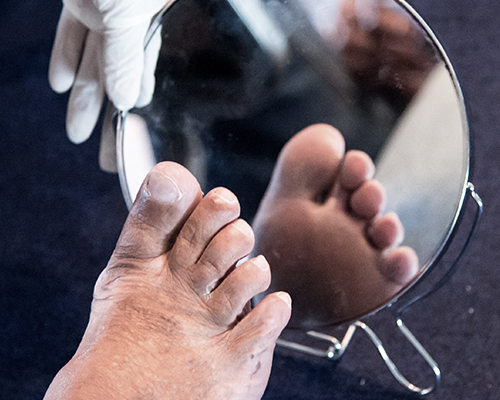
Diabetic foot sole examination with mirror
As a result of the comprehensive evaluation of the patient’s lower limb, individualized instructions are provided for daily care and prevention of diabetic foot complications. If necessary, the patient is referred to specialists for the design and construction of therapeutic footwear.

Daily foot care in diabetes mellitus