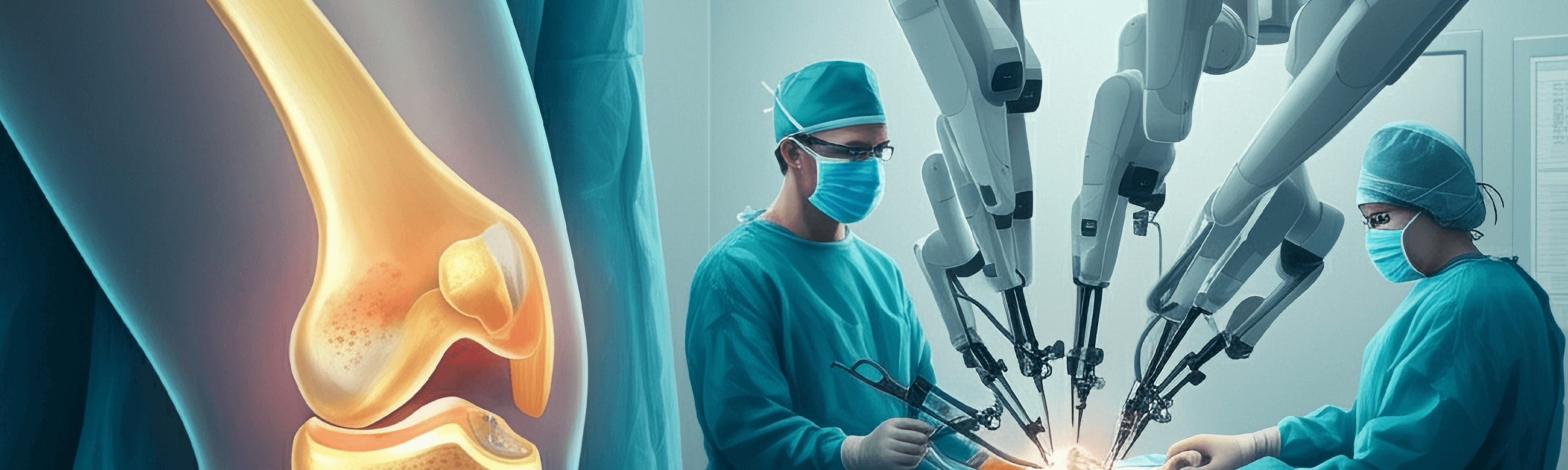





Robotic Technology in Orthopedic Surgery
Greece has entered the robotic era in Orthopedic Surgery. This technology is already being successfully implemented in some of the largest hospitals (approx. 180) in the USA, as well as in Italy and Germany.
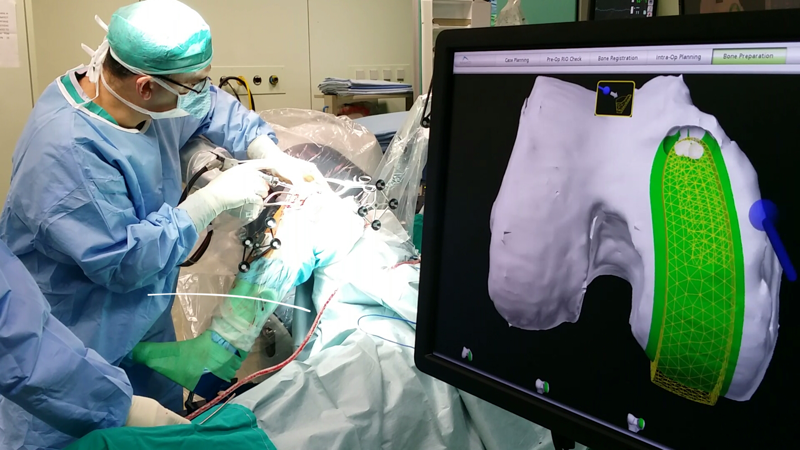
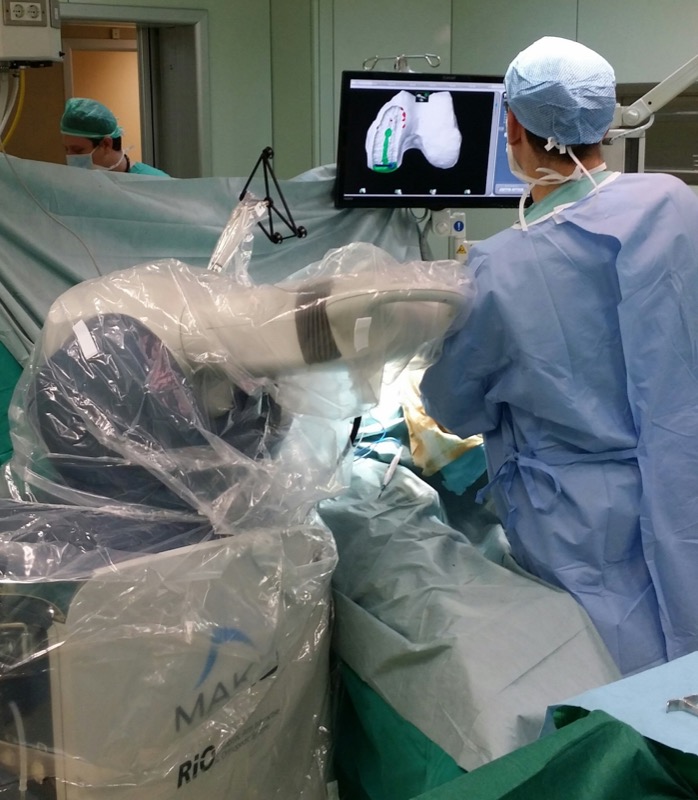
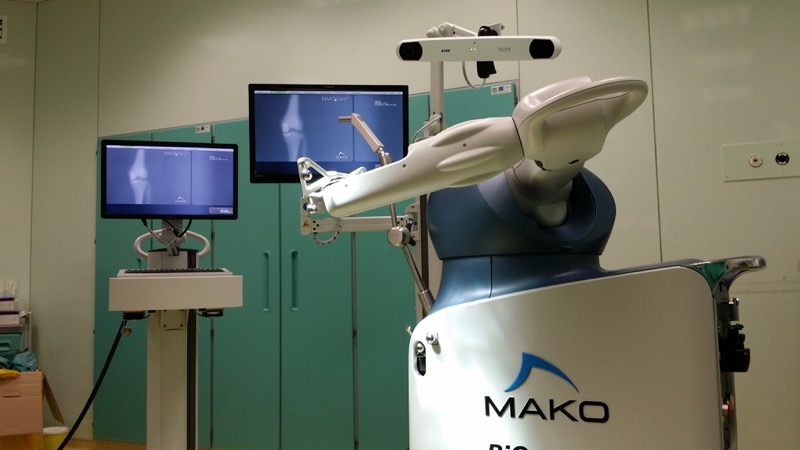
The Management of Metropolitan Hospital has reaffirmed its dedication to offering top-level healthcare services by installing the Robotic Arm Interactive Orthopedic System (RIO®), unique in Greece. The RIO® can be used to perform minimally invasive and highly accurate procedures on the knee and hip.
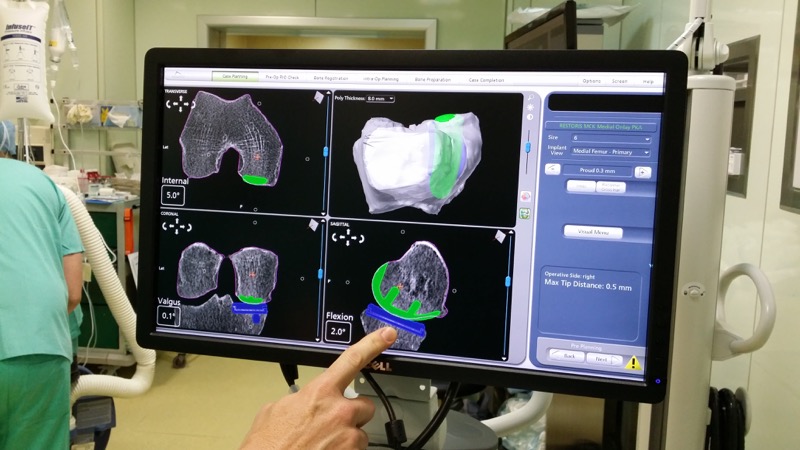
Using the innovative MAKOplasty® Partial Knee Resurfacing robotic technique, a large part (over 50%) of patients who must undergo total knee arthroplasty can avoid it by opting for a less extensive and more effective procedure. This technique only replaces the damaged part of the articular cartilage and not the whole joint, as is the case with total arthroplasty. This restores the knee joint and offers natural movement, as well as faster and painless return to everyday activities.
Robotic Orthopedics
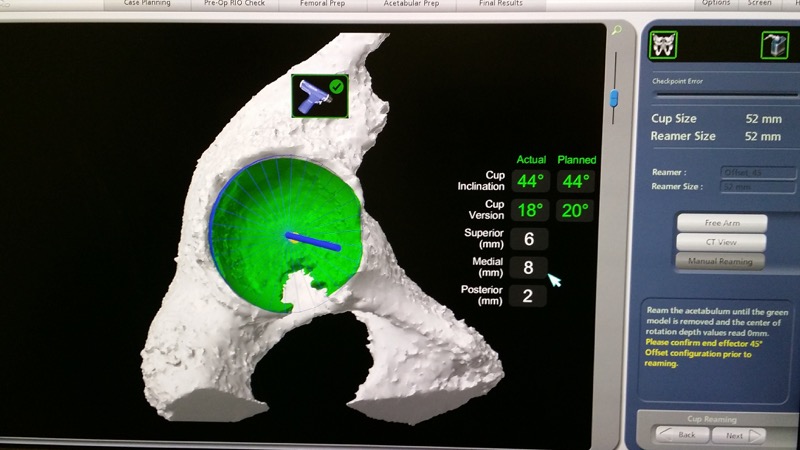
Metropolitan Hospital is equipped with the state-of-the-art American Mako orthopaedic robotic system, which is fully operational and enables highly personalized knee and hip procedures with exceptional precision, reaching one-tenth of a millimetre. With the assistance of the Mako robotic system, knee joint damage can be treated at an early stage, long before total joint replacement becomes necessary, while conditions affecting the hip joint can also be effectively addressed.
In cases where only specific areas of the knee are affected, partial joint replacement can be performed. Early-stage knee alignment abnormalities, such as varus and valgus deformities, can now be treated, while limitations in knee flexion or extension can be significantly reduced or even eliminated. Robotic knee surgery offers an advanced treatment option for patients with arthritis who may have previously been advised that joint replacement could eventually be necessary but that it was still too early to proceed with surgery.
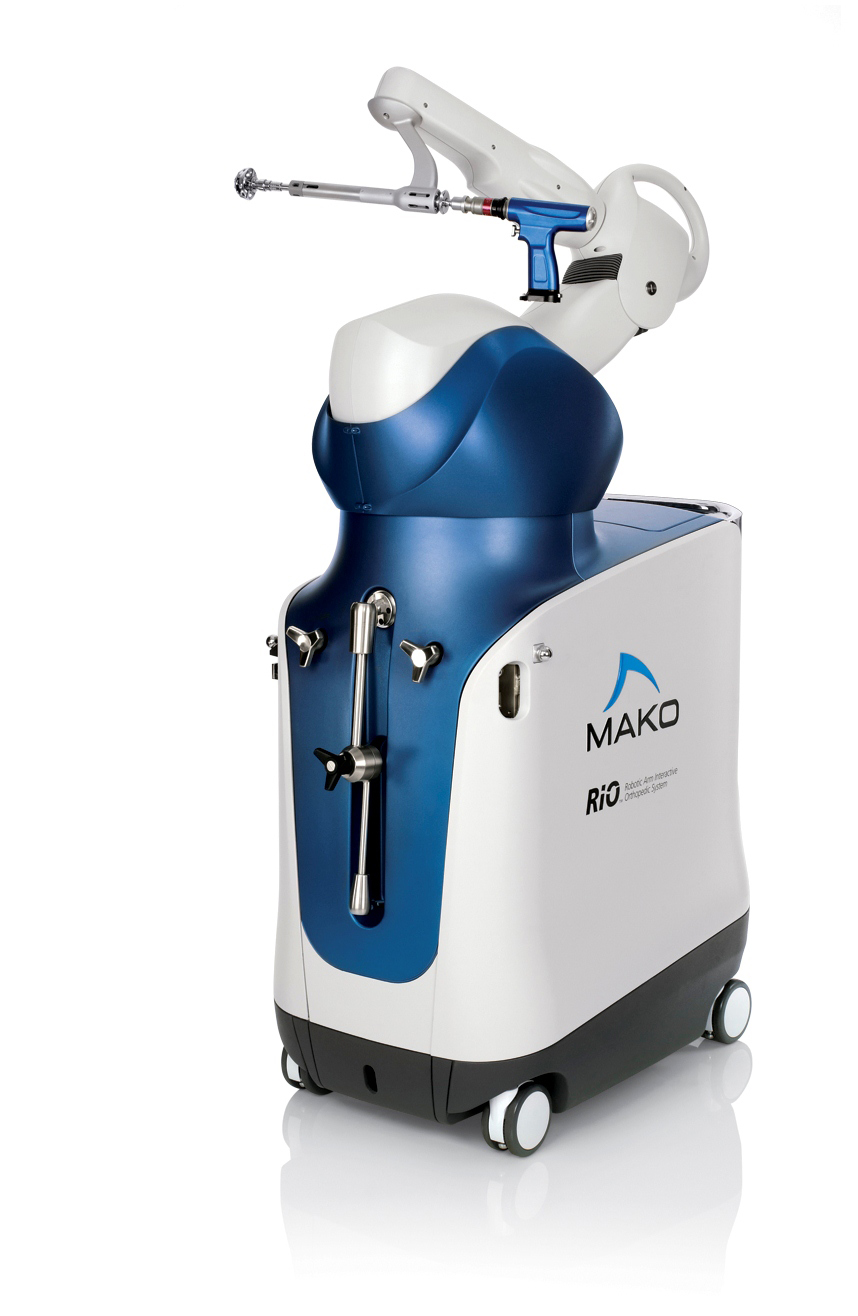
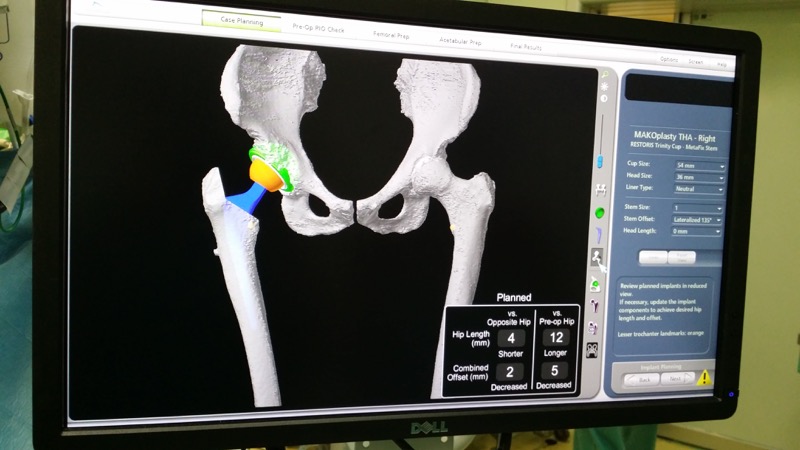
With regard to the hip, a joint affected by osteoarthritis or another degenerative condition can undergo minimally invasive robotic-assisted replacement using specialized titanium implants designed for use with the Mako robotic system.
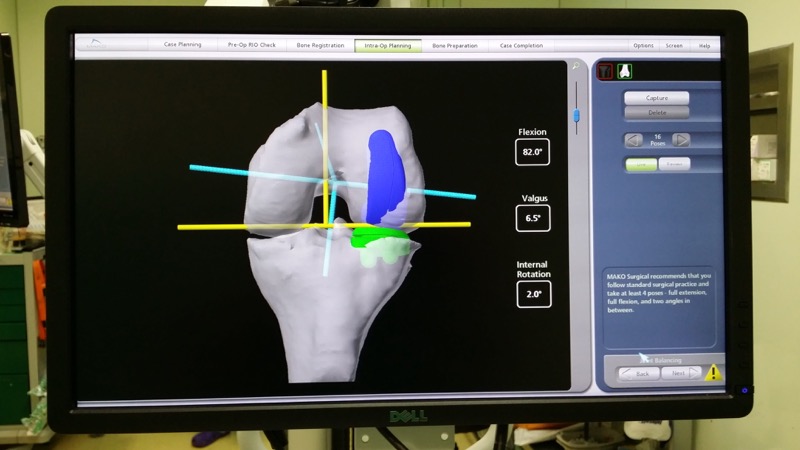
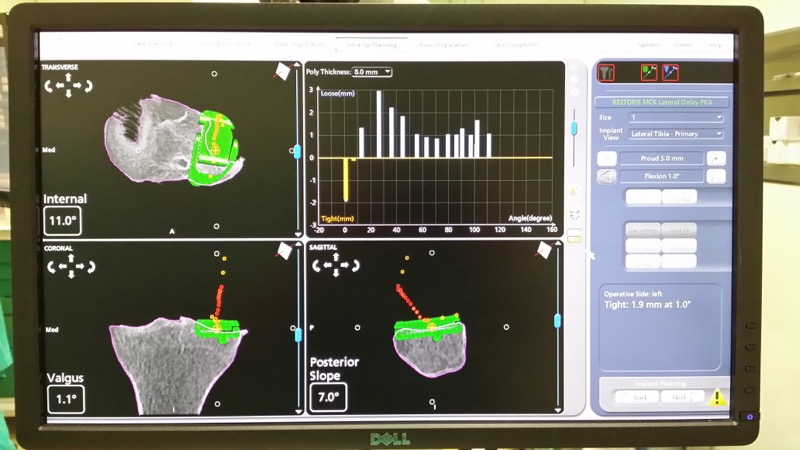
The advanced technology of the Mako orthopaedic robotic system enables highly accurate preoperative planning and surgical simulation. It allows the anticipated surgical outcome to be assessed across three axes, with accuracy to within one degree, before the procedure is performed. At the same time, whenever clinically indicated, the medical team successfully applies the latest knee and hip arthroplasty techniques, including minimally invasive surgery (MIS) and navigation-assisted procedures.
During the first two years of operation, a large number of knee and hip procedures were successfully performed, while seven physicians, five nurses and two computer system operators completed specialized training in the use of the Mako orthopaedic robotic system within the Department. In addition, two physician training seminars were organized under fully simulated surgical conditions.
Metropolitan Hospital’s Department of Robotic Orthopaedic Surgery is officially recognized internationally as a Centre of Excellence, serving as a centre for the highest standards in the application of specialized expertise, as well as for education and research. The Department has welcomed physicians from five countries for short-term training, as well as technologists from four countries, while patients from nine different countries have undergone surgery at the Department. More recently, at a conference in the United States, Metropolitan Hospital’s Department of Robotic Orthopaedic Surgery was recognized as one of the world’s most successful and fastest-growing departments in its field.
The Department’s Directors were invited to the United States to undertake an important role in the training of new physicians in both the US and Europe. The Department of Robotic Orthopaedic Surgery not only performs the full range of currently available applications, but has also received a commitment from the robotic applications research centre in the United States that Metropolitan Hospital will be among the first centres worldwide to gain access to the latest applications currently under development. In addition, the Department’s physicians will actively participate in the design and research of future applications in robotic orthopaedic surgery.
These emerging applications extend to other joints of the body and a broader range of orthopaedic conditions. Robotic technology has become firmly established in orthopaedic surgery and, in the United States, has been adopted by 220 of the country’s leading hospitals. With its continuously expanding clinical activity and active involvement in research, Metropolitan Hospital’s Department of Robotic Orthopaedic Surgery continues to advance dynamically, investing in innovation, scientific expertise and the integration of modern technologies into surgical practice.
Benefits
- Short hospitalization (1-2 days
- Greater accuracy due to CT-assisted 3D preoperative planning and robotic assistance during surgery
- Small incision (5-6 cm)
- Natural feeling in the joint (since the cruciate ligaments are preserved)
- Fast return to normal activities (and sports)
- Minimal perioperative complications (approximately 1/3 compared to total arthroplasty)
Similar benefits can be enjoyed when performing the MAKOplasty® Total Hip Arthroplasty robotic technique for hip osteoarthritis, with the most significant being the high precision when placing and aligning the prosthesis, a key factor for impressive long-term results.
 01
01 02
02 03
03 04
04 06
06 07
07 08
08 09
09